
Content overseen by: David Van de Borne · Updated on 27 November 2026
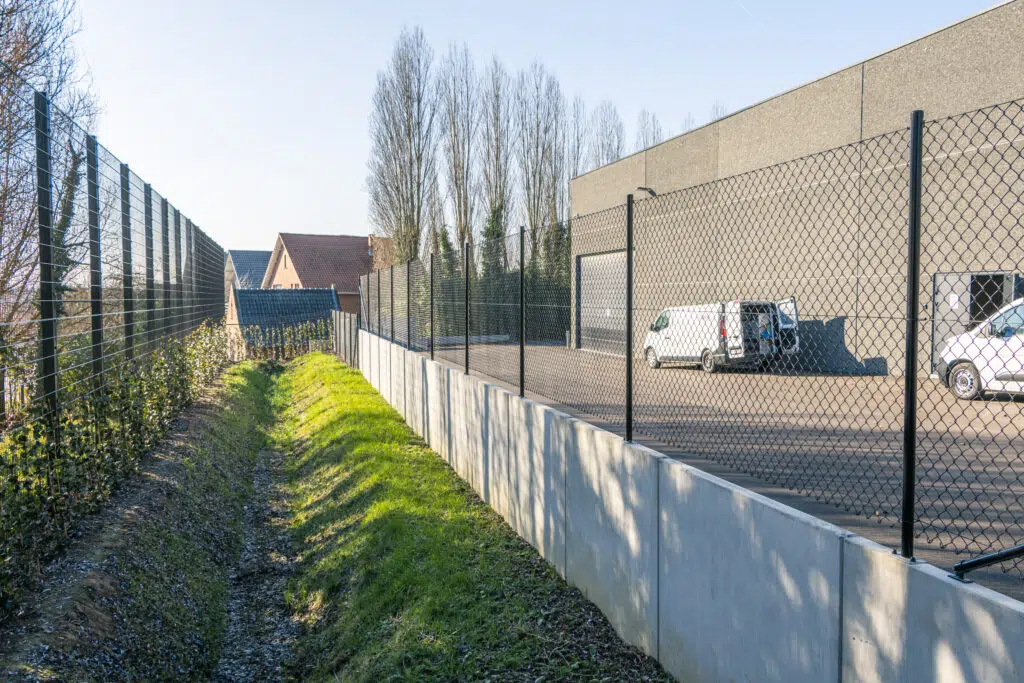
What should your fencing and access achieve?
Start with who and what needs to enter. Staff, visitors, suppliers and lorries may use different routes. Fencing can mark a boundary, separate a work area or restrict access to part of the site. Write down these functions separately so that an access solution is not chosen on appearance alone.
Choosing fencing also depends on existing walls, level differences and the required openness. Fencing is not a complete security strategy. Explain where visibility is needed and where screening is preferred. The actual execution requires assessment of your own site.
Why assess the entire vehicle route?
A usable access starts before the gate. Review the approach, turning movements, waiting space and connection to the site. Delivery vehicles may have different needs from cars. Plans and vehicle information support discussion without using general passage dimensions as prescriptions.
For automatic gates, movement, fixings, power and connection to fencing need coordinated consideration. Discuss pedestrian use too. A vehicle entrance is not automatically a suitable staff route. Those responsible must define safety requirements and special access needs for the actual situation.
How do gates, barriers and bollards differ?
A gate can close an opening in a fence. A barrier generally manages vehicle passage without closing the entire opening. Bollards limit or manage passage depending on their design and use. Product names alone do not establish a security level. Have specific properties assessed alongside the intended purpose.
Discuss barriers and bollards in relation to the site rather than as isolated alternatives that always serve the same purpose as a gate. The comparison below helps describe the scope. It is not a technical product assessment or a guarantee that every type suits your location.
How are foundations and electrical connections prepared?
Posts and access installations must suit the ground and selected layout. Existing paving, underground services, cable routes and drainage can affect the works. Identify retained elements and available installation data. Foundations and fixings cannot be determined from a product photograph alone.
Through concrete works and foundations, DCO can include building preparation in the project. Define the transition to the electrical installation: where power runs, who specifies connections and who supplies components. Allow for future expansion only where it forms part of the discussed need.
What should be agreed for operation and maintenance?
Identify who operates and manages access. Discuss the intended use, possible links to other systems and information required at handover. Options depend on the selected installation; do not assume a connection that has not entered the scope.
Define checks and maintenance arrangements for the actual installation. Damage to a post, a changed site layout or drainage problems can affect use. Keep installation details and records of completed works so future alterations can be discussed from the actual situation.
Comparing fences, gates, barriers and bollards
The right choice depends on your site, how it is used and the access you need.
| Element | Main function | Consider together |
|---|---|---|
| Fence | Define a site or area boundary | Connections to walls, posts and ground |
| Gate | Close an opening and allow passage | Movement, fixings, controls and power |
| Barrier | Manage vehicle passage | Approach, controls and other entrances |
| Bollards | Limit or manage passage | Layout, foundations and intended operation |
Frequently asked questions
More answers about preparing and carrying out your project.
Does a barrier replace closed fencing?
No. A barrier generally manages vehicle passage without screening the entire opening. Assess the required function and other entrances. The combination must suit the site and users.
Can a new gate use existing posts?
Their condition, fixings, foundations and the selected gate’s requirements need assessment. A post that appears sturdy is not automatically suitable for a different installation.
Does every entrance need electrical operation?
No. The choice depends on use, operation and intended function. If electrical operation or system integration is requested, power, cable routes and connection requirements belong in the preparation.
What information helps define a site entrance?
Send photographs from both sides, available site plans and information about users and vehicles. Identify existing walls, paving and connection points. Explain what should be retained and how you expect access to operate.
Content overseen by
David Van de Borne
Director of DCO Construction, the family business active in construction, finishing and technical works since 1980. The articles focus on the practical delivery of business projects.
Discuss your fencing and access